July 29, 2026
Image SEO Checklist: 25 Proven Tips to Rank Higher in Google Images (2026 Guide)
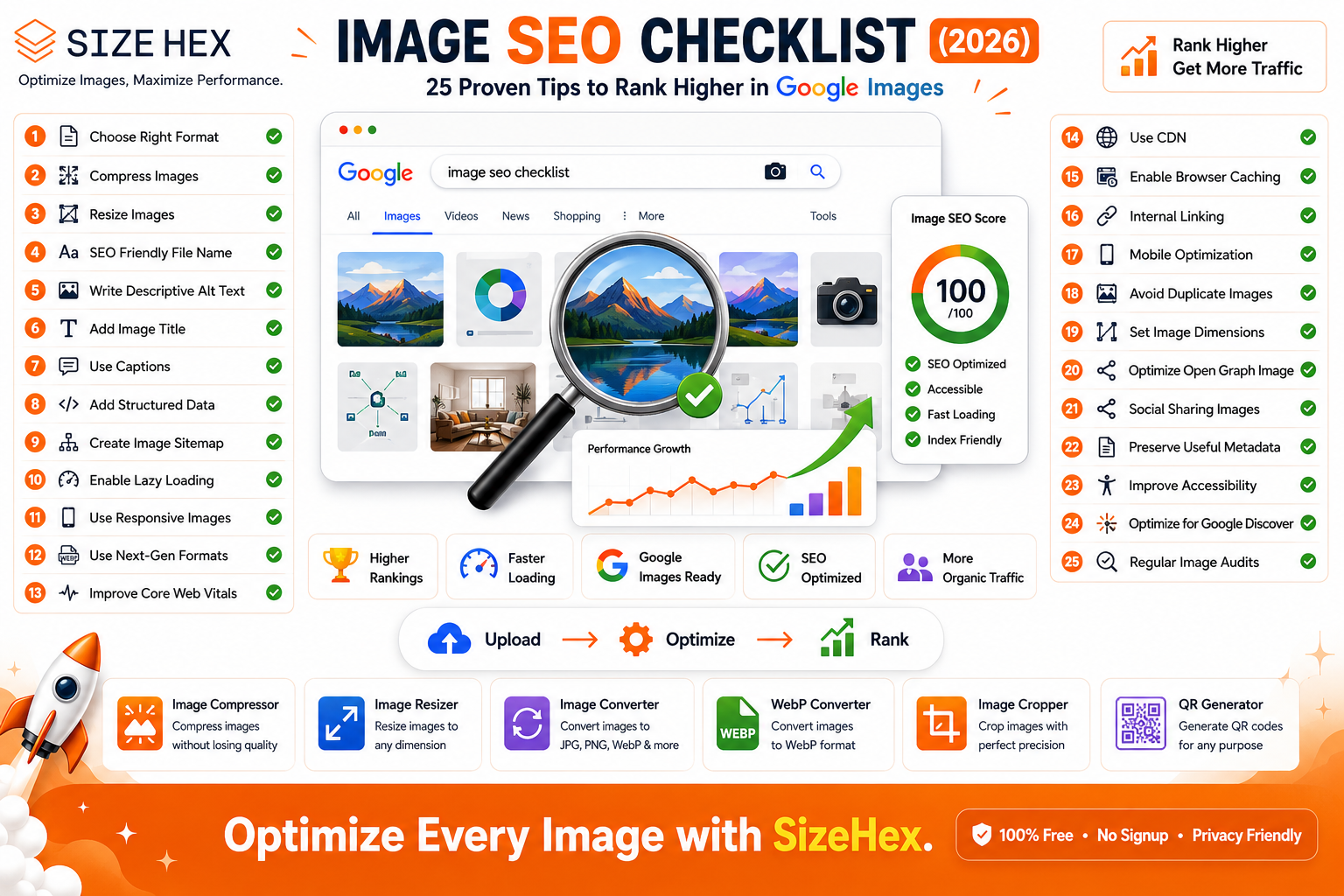
Image SEO Checklist: 25 Proven Tips to Rank Higher in Google Images (2026 Guide)
Primary Keyword: Image SEO Checklist
URL Slug: image-seo-checklist
Meta Title: Image SEO Checklist: 25 Proven Tips to Rank Higher in Google Images (2026 Guide)
Meta Description: Learn the ultimate Image SEO Checklist for 2026. Discover 25 proven tips to optimize images, improve page speed, rank higher in Google Images, and drive more organic traffic to your website.
Image SEO Checklist (2026)
Images are one of the most powerful elements of any website. They make content easier to understand, improve user engagement, and help communicate ideas more effectively. However, simply uploading high-quality images isn't enough. If your images aren't optimized for search engines, you're missing valuable opportunities to attract visitors through Google Images and improve your overall SEO performance.
Many website owners focus on keywords, backlinks, and content while overlooking image optimization. As a result, they upload oversized files, use generic filenames like IMG_1234.jpg, forget to add alt text, or ignore modern image formats. These small mistakes can slow down websites, reduce accessibility, and limit visibility in search results.
Image SEO is the process of optimizing images so that search engines can understand, index, and rank them more effectively. Proper image optimization improves page speed, enhances user experience, supports accessibility, and increases the chances of appearing in Google Images and other visual search features.
In this comprehensive guide, you'll learn a practical 25-point Image SEO Checklist that covers everything from choosing the right image format to improving Core Web Vitals. Whether you run a blog, business website, e-commerce store, or portfolio, these best practices will help you create search-engine-friendly images in 2026.
What Is Image SEO?
Image SEO (Search Engine Optimization) is the process of optimizing images so that search engines like Google can understand, index, and rank them effectively.
Unlike humans, search engines cannot fully understand the content of an image just by looking at it. They rely on additional signals such as:
- Image file names
- Alt text
- Captions
- Surrounding page content
- Structured data
- Image dimensions
- Page speed
- Internal links
When all these elements work together, search engines gain a better understanding of your images, making them more likely to appear in Google Images and relevant search results.
Why Image SEO Matters in 2026
Search engines have become significantly smarter in recent years. Google's AI can recognize objects, colors, faces, products, landmarks, and even text within images. Despite these improvements, Google still depends on technical optimization and contextual information to accurately interpret and rank images.
Proper Image SEO provides several benefits.
Higher Rankings in Google Images
Optimized images have a better chance of appearing in Google Images, which can generate additional organic traffic without creating extra content.
Faster Website Performance
Large, unoptimized images are often the biggest reason websites load slowly.
Optimized images help:
- Reduce page load time
- Improve user experience
- Lower bounce rates
- Increase visitor satisfaction
Better Core Web Vitals
Google considers page experience an important ranking factor.
Optimized images improve metrics like:
- Largest Contentful Paint (LCP)
- Cumulative Layout Shift (CLS)
- Interaction to Next Paint (INP)
Improved Accessibility
Visitors using screen readers rely on descriptive alternative text to understand images.
Good Image SEO benefits everyone, including users with visual impairments.
More Organic Traffic
Images can appear in:
- Google Images
- Google Discover
- Rich Results
- Shopping Results
- Visual Search
Every optimized image becomes another opportunity to attract visitors.
How Google Understands Images
Google doesn't rely on a single factor to determine what an image represents. Instead, it analyzes multiple signals together.
1. File Name
Instead of:
IMG_5482.jpg
Use:
image-seo-checklist-guide.jpg
Descriptive filenames provide meaningful context.
2. Alt Text
Alternative text describes the content of an image.
Example:
Good Alt Text
"Illustration showing an Image SEO checklist with optimization steps."
Poor Alt Text:
"Image"
or
"Photo123"
3. Surrounding Content
Google reads the text around an image to understand its context.
If an article discusses Image SEO and includes relevant images nearby, Google gains stronger signals about the image's purpose.
4. Page Topic
Images should closely match the overall topic of the page.
For example:
A blog about Image Compression should include images related to compression rather than unrelated stock photos.
5. Captions
Image captions provide additional context for both users and search engines.
While captions are optional, they can improve user engagement and reinforce topical relevance.
6. Structured Data
Schema markup helps search engines understand additional information about your images.
Examples include:
- ImageObject
- Article
- Product
- Recipe
Structured data increases the chances of rich search results.
Major Image SEO Ranking Factors
Google considers many factors when evaluating images.
The most important include:
- Relevant page content
- Descriptive filenames
- Accurate alt text
- Proper image dimensions
- Compression
- Modern image formats
- Responsive images
- Page speed
- Mobile friendliness
- Accessibility
- Structured data
- Internal linking
- Image sitemap
- HTTPS
- User experience
Optimizing multiple factors together typically delivers better results than focusing on just one.
Benefits of Image SEO
Investing time in image optimization offers long-term advantages for almost every type of website.
Increased Organic Traffic
Optimized images can appear in Google Images, bringing visitors who may not discover your site through traditional search results.
Faster Loading Pages
Compressed and properly sized images reduce page weight, improving loading times for desktop and mobile users.
Better User Experience
Visitors appreciate fast-loading pages with clear, high-quality visuals that support the content rather than slow it down.
Improved Conversion Rates
For e-commerce websites and service businesses, optimized product images and visuals can build trust and encourage users to take action.
Stronger SEO Performance
Image optimization contributes to:
- Better page speed
- Improved Core Web Vitals
- Lower bounce rates
- Enhanced crawl efficiency
These improvements can positively influence overall SEO.
Better Social Sharing
Well-optimized images are more likely to display correctly when shared on platforms like Facebook, LinkedIn, X (Twitter), and WhatsApp.
Common Image SEO Mistakes
Avoiding these mistakes can significantly improve your image optimization efforts.
Uploading Original Camera Images
Modern cameras and smartphones produce extremely large images.
Instead of uploading a 6 MB photo directly, resize and compress it first.
Using Generic File Names
Avoid filenames such as:
- DSC00012.jpg
- IMG12345.png
- Photo001.webp
Use descriptive names that reflect the image content.
Forgetting Alt Text
Missing alt text reduces accessibility and removes an important ranking signal.
Choosing the Wrong Image Format
Using PNG for every photo or JPG for transparent graphics can lead to unnecessarily large files or reduced quality.
Choose the format that best suits the content.
Ignoring Image Dimensions
Displaying a 4000-pixel-wide image inside a 600-pixel container wastes bandwidth and slows page loading.
Resize images before uploading.
Skipping Compression
Even correctly sized images may be larger than necessary.
Compress them to reduce file size while maintaining visual quality.
Missing Image Sitemap
An image sitemap helps search engines discover and index images more efficiently.
No Lazy Loading
Loading every image immediately can slow down pages, especially those with many visuals.
Lazy loading improves performance by loading images only when needed.
Image SEO Workflow
A simple optimization workflow can make every image more search-engine friendly.
Create Image
      ↓
Crop if Needed
      ↓
Resize to Correct Dimensions
      ↓
Choose the Right Format (JPG, PNG, WebP, AVIF)
      ↓
Compress Image
      ↓
Use a Descriptive File Name
      ↓
Write SEO-Friendly Alt Text
      ↓
Upload to Website
      ↓
Add Captions (Optional)
      ↓
Include Structured Data
      ↓
Submit Image Sitemap
      ↓
Monitor Performance
Following this process ensures that every image contributes positively to both user experience and search visibility.
Key Takeaways
- Image SEO is an essential part of modern search engine optimization.
- Search engines rely on filenames, alt text, surrounding content, and technical signals to understand images.
- Optimized images improve page speed, accessibility, Core Web Vitals, and organic traffic.
- Avoid common mistakes such as oversized files, generic filenames, missing alt text, and incorrect image formats.
- A consistent optimization workflow helps ensure every image supports your website's SEO goals.
The Complete Image SEO Checklist (25 Proven Tips)
Now that you understand why Image SEO matters, it's time to optimize your images like a professional.
This checklist covers the most important techniques used by SEO experts to help images rank higher in Google Images while improving page speed, accessibility, and user experience.
1. Choose the Right Image Format
The image format you choose directly affects:
- Loading speed
- Image quality
- Storage space
- User experience
Recommended Formats
Image Type Best Format Photographs JPG Graphics PNG Website Images WebP Modern Websites AVIF Logos & Icons SVG Why It Matters
Using the wrong format often creates unnecessarily large files or reduces image quality.
Example
❌ Product.png (5 MB)
✅ Product.webp (320 KB)
2. Compress Every Image
Large images slow websites significantly.
Compress images before uploading them.
Compression helps:
- Improve page speed
- Reduce bandwidth
- Improve Core Web Vitals
Aim to reduce image size without noticeable quality loss.
3. Resize Images Before Uploading
Never upload a 5000-pixel-wide image if your website displays it at only 1200 pixels.
Instead:
Original
5000 × 3500 px
↓
Resize
1200 × 840 px
↓
Compress
↓
Upload
Benefits:
- Smaller files
- Faster loading
- Better SEO
4. Use SEO-Friendly File Names
Google reads image filenames.
Instead of:
IMG_4592.jpgUse:
image-seo-checklist-guide.jpgGood filenames should:
- Describe the image
- Include keywords naturally
- Use hyphens
- Avoid special characters
5. Write Descriptive Alt Text
Alt text is one of the most important Image SEO signals.
Good Example:
Infographic showing an Image SEO checklist for optimizing website images.
Poor Example:
image123
or
picture
Keep alt text:
- Descriptive
- Natural
- Helpful
Avoid keyword stuffing.
6. Add Image Titles (When Helpful)
Image titles can improve usability, although they are less important than alt text.
Example:
Image SEO Checklist InfographicUse titles only when they provide additional value.
7. Add Captions
Captions are often read more frequently than body text.
Example:
Properly optimized images can improve both Google rankings and page speed.
Captions help users understand visuals and reinforce topical relevance.
8. Use Structured Data
Schema markup provides additional context to search engines.
Useful schema types include:
- ImageObject
- Article
- Product
- Recipe
- Organization
Structured data increases eligibility for rich search results.
9. Create an Image Sitemap
An Image Sitemap helps Google discover images that might otherwise be missed.
Include:
- Image URL
- Page URL
- Caption
- Title
- License (optional)
This improves crawling efficiency.
10. Enable Lazy Loading
Lazy loading delays image loading until users scroll near them.
Benefits:
- Faster initial page load
- Lower bandwidth usage
- Better Largest Contentful Paint (LCP)
Modern browsers support native lazy loading using:
loading="lazy"
11. Use Responsive Images
Different devices require different image sizes.
Use responsive images so browsers download the most appropriate version.
Benefits:
- Faster mobile loading
- Reduced data usage
- Better user experience
12. Use Next-Generation Formats
Modern formats such as WebP and AVIF generally provide better compression than JPG and PNG.
Benefits:
- Smaller files
- Better quality
- Faster loading
Many websites now use WebP as the default image format.
13. Improve Core Web Vitals
Images strongly influence Google's page experience metrics.
Optimize:
Largest Contentful Paint (LCP)
Reduce large image sizes.
Cumulative Layout Shift (CLS)
Always specify image width and height.
Interaction to Next Paint (INP)
Reduce unnecessary JavaScript affecting image loading.
14. Use a CDN
A Content Delivery Network delivers images from servers closer to visitors.
Benefits:
- Faster loading worldwide
- Reduced server load
- Improved reliability
This is especially important for websites serving international audiences.
15. Enable Browser Caching
Browser caching stores images locally after the first visit.
Benefits:
- Faster repeat visits
- Lower bandwidth usage
- Improved user experience
16. Use Internal Links Around Images
Google analyzes nearby content.
Mention relevant topics naturally around images.
For example:
An article about WebP should include related images discussing WebP optimization.
17. Optimize for Mobile
Most users browse websites on smartphones.
Ensure images:
- Scale correctly
- Load quickly
- Remain readable
- Don't overflow containers
Responsive design is essential.
18. Avoid Duplicate Images
Using identical images across dozens of pages can reduce uniqueness.
Whenever possible:
- Create original graphics
- Customize featured images
- Use unique screenshots
19. Specify Image Dimensions
Always define image dimensions.
Example:
width="1200"
height="630"
This prevents layout shifts.
20. Optimize Open Graph Images
Social media platforms display Open Graph images when pages are shared.
Recommended size:
1200 × 630 px
Use:
- High-quality visuals
- Readable text
- Consistent branding
21. Optimize Social Sharing Images
Your featured image should look attractive on:
- X (Twitter)
Avoid:
- Tiny text
- Busy backgrounds
- Low-resolution graphics
22. Preserve Useful Metadata (When Appropriate)
Some metadata, such as copyright or licensing information, can be useful to retain. For most websites, unnecessary metadata can be removed to reduce file size, but keep any information that's important for ownership or compliance.
23. Improve Accessibility
Accessible images help everyone.
Checklist:
✔ Accurate alt text
✔ Decorative images marked appropriately
✔ Good color contrast
✔ Readable text
Accessibility also supports better SEO.
24. Optimize for Google Discover
Google Discover often highlights pages with:
- High-quality original images
- Fast loading speed
- Helpful content
- Strong authority
Use large, clear featured images that match the article topic.
25. Perform Regular Image Audits
Review your website regularly.
Check for:
- Broken images
- Missing alt text
- Oversized files
- Duplicate filenames
- Slow-loading pages
- Outdated formats
Regular audits keep your website optimized as it grows.
Complete Image SEO Checklist
Task Status Choose Correct Format ✅ Compress Images ✅ Resize Images ✅ SEO File Name ✅ Alt Text ✅ Image Title ✅ Caption ✅ Structured Data ✅ Image Sitemap ✅ Lazy Loading ✅ Responsive Images ✅ WebP / AVIF ✅ Core Web Vitals ✅ CDN ✅ Browser Cache ✅ Internal Linking ✅ Mobile Optimization ✅ Unique Images ✅ Image Dimensions ✅ Open Graph Image ✅ Social Sharing Image ✅ Preserve Useful Metadata ✅ Accessibility ✅ Google Discover ✅ Image Audit ✅
Pro Tips
- Compress every image before uploading.
- Prefer WebP or AVIF for website images when your workflow supports them.
- Use descriptive filenames and meaningful alt text.
- Keep featured images consistent with your brand.
- Combine image optimization with a CDN and browser caching for better performance.
- Review your images periodically to catch broken links, missing alt text, or oversized files.
Advanced Image SEO Tips, FAQs & Final Checklist
You've now learned the fundamentals of Image SEO and the complete 25-point optimization checklist. The final step is ensuring that every image you publish follows a consistent workflow that improves search visibility, user experience, and website performance.
Let's explore advanced optimization techniques used by SEO professionals in 2026.
Before Publishing Image SEO Checklist
Before uploading any image to your website, review this checklist.
Image Quality
✅ High-quality original image
✅ Correct dimensions
✅ Proper aspect ratio
✅ No blurry or pixelated areas
Image Optimization
✅ Resized before uploading
✅ Compressed without noticeable quality loss
✅ Correct image format selected
- JPG
- PNG
- WebP
- AVIF
- SVG (for logos)
SEO
✅ Descriptive filename
Example:
image-seo-checklist-infographic.webp✅ Meaningful Alt Text
✅ Optional image title
✅ Helpful caption (if appropriate)
Technical SEO
✅ Width and height specified
✅ Lazy loading enabled (where appropriate)
✅ Responsive images configured
✅ Image included in sitemap
✅ Structured data added (if applicable)
Performance
✅ CDN enabled
✅ Browser caching enabled
✅ Image loads quickly
✅ Mobile-friendly
Advanced Image SEO Tips
These strategies can help you gain an advantage over competitors.
1. Create Original Images
Original graphics are more valuable than generic stock photos.
Examples include:
- Infographics
- Comparison tables
- Charts
- Custom illustrations
- Screenshots
- Tutorials
Unique visuals encourage sharing and can improve engagement.
2. Match Images to Search Intent
Every image should support the user's intent.
Examples:
If the article is about:
Image Compression
Include:
- Compression comparison charts
- Before-and-after examples
- File size demonstrations
Avoid unrelated decorative images.
3. Optimize Featured Images
Your featured image is often displayed in:
- Google Discover
- Social media previews
- Search snippets
- Messaging apps
A good featured image should:
- Match the article topic
- Include readable text
- Use consistent branding
- Be visually appealing
4. Build Internal Links Around Images
Images perform better when surrounded by relevant content.
For example, an article about WebP should naturally link to related topics like image compression, image conversion, and website optimization.
This strengthens topical authority and helps search engines understand your content ecosystem.
5. Improve Page Speed
Even perfectly optimized images won't perform well if the page is slow.
Improve overall performance by:
- Reducing unnecessary JavaScript
- Optimizing CSS
- Enabling compression
- Using a CDN
- Leveraging browser caching
6. Use Consistent Branding
Consistent branding helps users recognize your content.
Include:
- Brand colors
- Logo placement
- Consistent typography
- Similar visual style
For SizeHex, maintaining the same orange-and-white design across blog graphics strengthens brand recognition.
7. Monitor Google Search Console
Regularly check:
- Image indexing
- Clicks
- Impressions
- Crawl issues
- Core Web Vitals
This helps identify optimization opportunities.
8. Keep Content Updated
Refresh older articles by:
- Replacing outdated screenshots
- Converting older JPG images to WebP or AVIF
- Improving alt text
- Updating image dimensions
- Compressing oversized files
Fresh content signals ongoing quality to both users and search engines.
Common Image SEO Mistakes to Avoid
Avoid these mistakes to maximize the effectiveness of your image optimization efforts.
❌ Uploading original camera files
❌ Generic filenames like
IMG_1234.jpg❌ Missing alt text
❌ Oversized images
❌ Using PNG for every photo
❌ Forgetting to compress images
❌ Ignoring mobile optimization
❌ Missing structured data where relevant
❌ Not using lazy loading
❌ Publishing duplicate featured images across multiple blogs
Frequently Asked Questions (FAQ)
1. What is Image SEO?
Image SEO is the process of optimizing images so they can be understood, indexed, and ranked by search engines while improving page performance and accessibility.
2. Why is Image SEO important?
It improves page speed, user experience, accessibility, and the chances of appearing in Google Images and other visual search features.
3. Which image format is best for SEO?
There isn't a single best format for every situation:
- JPG for photographs
- PNG for graphics
- WebP for modern websites
- AVIF for advanced optimization
- SVG for logos and icons
4. Does image compression affect SEO?
Proper compression reduces file size without noticeable quality loss, improving loading speed and supporting better SEO.
5. What is alt text?
Alt text describes an image for screen readers and search engines. It should clearly explain the image in natural language.
6. How long should alt text be?
Keep it concise and descriptive. A single sentence is often enough.
7. Should every image have alt text?
Informative images should. Purely decorative images can use empty alt attributes (
alt="") so screen readers skip them.
8. Does file name matter?
Yes. Descriptive filenames provide useful context to search engines.
9. Should I use WebP?
Yes, when your workflow supports it. WebP provides an excellent balance between quality and file size.
10. Is AVIF better than WebP?
AVIF often achieves even better compression, but compatibility with some tools and workflows may still be more limited than WebP.
11. What is lazy loading?
Lazy loading delays loading images until they are close to the user's viewport, improving initial page speed.
12. Should I use an image sitemap?
Yes. An image sitemap can help search engines discover and index your images more efficiently.
13. How often should I audit images?
Review your images regularly, especially after redesigns, content updates, or when performance issues arise.
14. Do images affect Core Web Vitals?
Yes. Large or improperly optimized images can negatively affect metrics such as Largest Contentful Paint (LCP) and Cumulative Layout Shift (CLS).
15. Can Image SEO increase organic traffic?
Yes. Well-optimized images can attract visitors through Google Images and support overall search visibility.
Conclusion
Image SEO is more than compressing files or adding alt text—it's a complete optimization strategy that improves website performance, accessibility, and search visibility.
By choosing the right image formats, resizing and compressing images, writing descriptive filenames and alt text, and using modern performance techniques like lazy loading and CDNs, you create a better experience for both users and search engines.
Treat every image as an opportunity to strengthen your website. Small improvements applied consistently across your site can lead to better rankings, faster pages, and more organic traffic over time.
Why Choose SizeHex?
SizeHex provides simple, fast, and privacy-friendly tools to optimize your images without installing software.
Features
- Convert between JPG, PNG, WebP, AVIF, GIF, BMP, and TIFF
- Compress images while maintaining quality
- Resize images for websites and social media
- Crop images to the perfect dimensions
- Browser-based tools with no installation required
- Free and easy to use on desktop and mobile
Whether you're a blogger, developer, designer, marketer, or business owner, SizeHex helps streamline your image optimization workflow.
Related Tools
Image Compressor
Reduce image file size while maintaining visual quality.
Image Resizer
https://www.sizehex.com/image-resizer.html
Resize images to the exact dimensions you need.
Image Converter
https://www.sizehex.com/image-converter.html
Convert images between popular formats in seconds.
WebP Converter
https://www.sizehex.com/webp-converter.html
Create efficient WebP images for faster websites.
Image Cropper
https://www.sizehex.com/image-crop.html
Crop images with precision for websites and social media.
QR Generator
https://www.sizehex.com/qr-generator.html
Generate QR codes for websites, contact details, Wi-Fi, and more.